



1200 vs. 1500 Point Carpet: Which One Offers Better Value for Money?
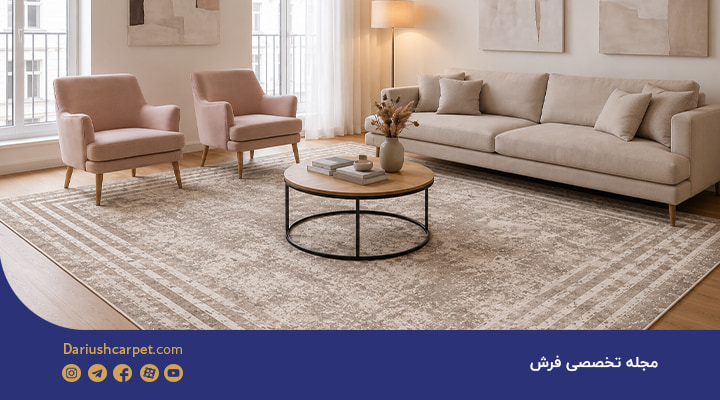
If you are planning to purchase a machine-made carpet, you may be torn between two popular options. "Hand-woven look" carpets—specifically the 1200-reed and 1500-reed varieties—are produced with exceptional intricacy and quality; while they share many similarities, they also differ in terms of fineness, density, thickness, and overall appearance.
The key question is: which is better—the 1200-reed or the 1500-reed carpet—and which offers better value?
There is no single answer that suits every buyer. If intricacy and a luxurious aesthetic are your deciding factors, the 1500-reed carpet is the recommended choice; however, if you are seeking a balance between beauty, quality, practicality, and price, the 1200-reed carpet is likely the better option.
In this article from the Darioush Carpet online magazine, we compare these two products side-by-side to help buyers make an informed decision and select the carpet that best meets their needs.
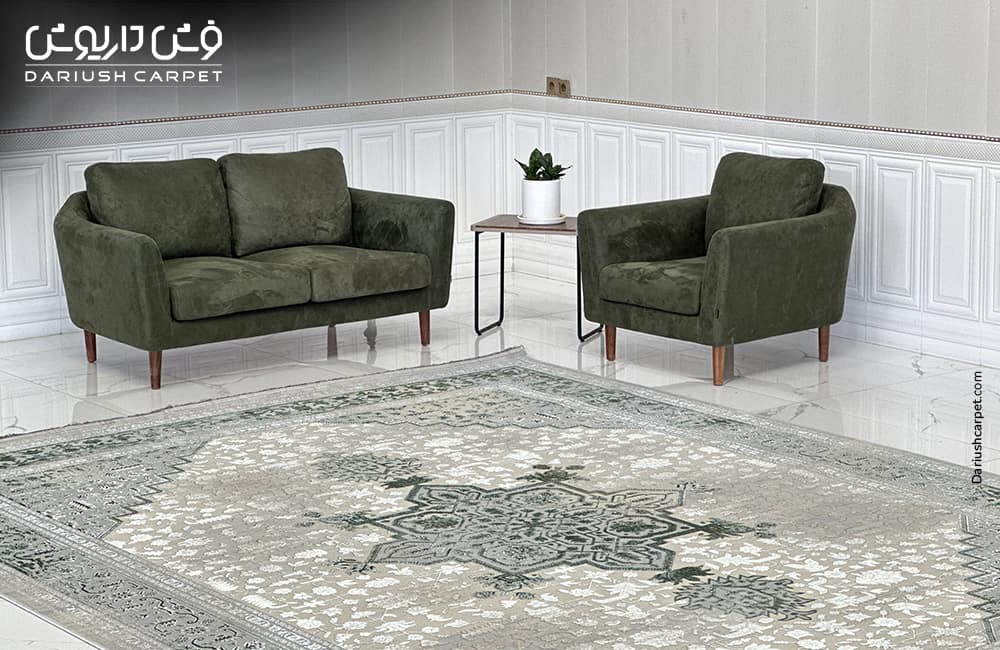
What exactly is the difference between 1200-reed and 1500-reed carpets?
Before comparing these two best-selling products, it is essential to understand the concept of "reed" in carpet weaving. Reed refers to the number of knots woven across one meter of the carpet's width. Thus, a 1200-reed carpet features approximately 1,200 knots per meter of width, while a 1500-reed carpet contains about 1,500 knots per meter.
Typically, 1200-reed carpets are produced with a density of 3,600, whereas 1500-reed carpets are produced with a density of 4,500 knots.
This difference gives the 1500-reed carpet a finer texture and allows the design details to be displayed with greater clarity.
However, it is important to note that reed and density alone are not sufficient indicators of carpet quality. Factors such as the type of yarn, fiber quality, weaving machinery, and pile height ultimately determine the product's quality.
1500 Reed Carpets: Why Are They So Popular?
One of the primary reasons for the popularity of 1500 reed carpets is the extraordinary intricacy of their weave.
As the number of knots along the width and length of the carpet increases, it becomes possible to incorporate greater detail into the design. Consequently, motifs such as floral patterns, Eslimi lines, central medallions, and other design elements appear much more delicate and precise in 1500-reed carpets.
This characteristic makes the 1500-reed carpet an appealing choice for those seeking an aesthetic that closely resembles hand-woven rugs. The pile height of these products is generally lower than that of 700-reed carpets, a feature that contributes to their refined and luxurious appearance. The "Miniature" and "Victoria" collections by Daryoush Carpet produce 1500-reed models with a pile height of approximately 6 millimeters.
Advantages of 1500-reed carpets:
* Exceptional fineness
* Greater pattern clarity compared to 700-reed carpets
* Luxurious and stylish appearance
* Suitable for classic and neoclassical decor
* Resemblance to hand-woven carpets
However, a crucial point regarding these "hand-woven look" carpets is that increased fineness usually comes with a higher price tag; therefore, choosing a 1500-reed carpet makes the most sense when you have the necessary budget and prioritize beauty and intricacy.
1200-reed carpets: A more balanced choice for many homes
On the other hand, 1200-reed carpets represent one of the most balanced options in terms of the interplay between finesse, quality, and price.
With a standard density of 3,600 knots, the 1200-reed carpet still boasts a very fine texture; compared to 700-reed or 500-reed carpets, its patterns are displayed with remarkable detail.
A key advantage of this product is the balance it strikes between a luxurious look and suitability for everyday use. If you intend to place the carpet in a high-traffic area, a 1200-reed carpet may prove to be the most logical choice.
Advantages of 1200-reed carpets:
* More affordable price compared to 1500-reed carpets
* Good level of intricacy and detail
* Wide variety of designs and colors
* Suitable for living rooms and bedrooms
* A great choice for everyday use
* An ideal balance between quality and price
* Options available in simple, classic, and embossed (raised-pattern) styles
Therefore, if you do not wish to pay a premium solely for increased intricacy, a 1200-reed carpet offers excellent value for money.
Which product offers greater softness: the 1200-reed or the 1500-reed carpet?
Answering this question is somewhat complex. Due to their high density and lower pile height, 1500-reed carpets generally offer superior intricacy and density compared to other products; conversely, 1200-reed carpets, being thicker, can provide a greater sense of comfort during sitting and daily use. It is worth noting, however, that the actual softness and suppleness of the product depend on the fiber type, pile height, and carpet structure.
Which one is more durable?
A common misconception among buyers is the belief that choosing a carpet with a higher reed count automatically results in proportionally greater durability. In reality, a carpet's durability is not determined solely by the reed count; other factors also play a role in the longevity and lifespan of the flooring.
Is a 1200-reed carpet more expensive than a 1500-reed one?
If both products are manufactured using the same fibers, the 1500-reed carpet will be more expensive than the 1200-reed version; however, if a 1200-reed carpet is woven with special fibers—such as viscose—or features silk-like highlights (*gol-e abrisham*), it can actually command a higher price than a 1500-reed carpet. This price difference stems from factors such as finer weave, higher density, the use of finer fibers, and a more complex manufacturing process. Market experts also typically classify 1500-reed carpets as luxury products.
Nevertheless, it is impossible to establish a fixed percentage for the price difference across all products, as the final price is influenced by the brand, fiber material, design, weave quality, dimensions, and other product specifications.
Should you buy a 1200-reed or a 1500-reed carpet for your reception area?
If your living area is spacious and experiences low foot traffic—and you want your home décor to exude luxury—a 1500-reed carpet is a highly attractive choice.
Its intricate designs and fine details pair beautifully with classic or neoclassical furniture; however, if the room serves as a daily family living space in addition to a place for hosting guests, a 1200-reed carpet might be the more practical option.
Ultimately, you must decide whether to prioritize superior intricacy or a balance between price and utility.
Which option is better for high-traffic homes?
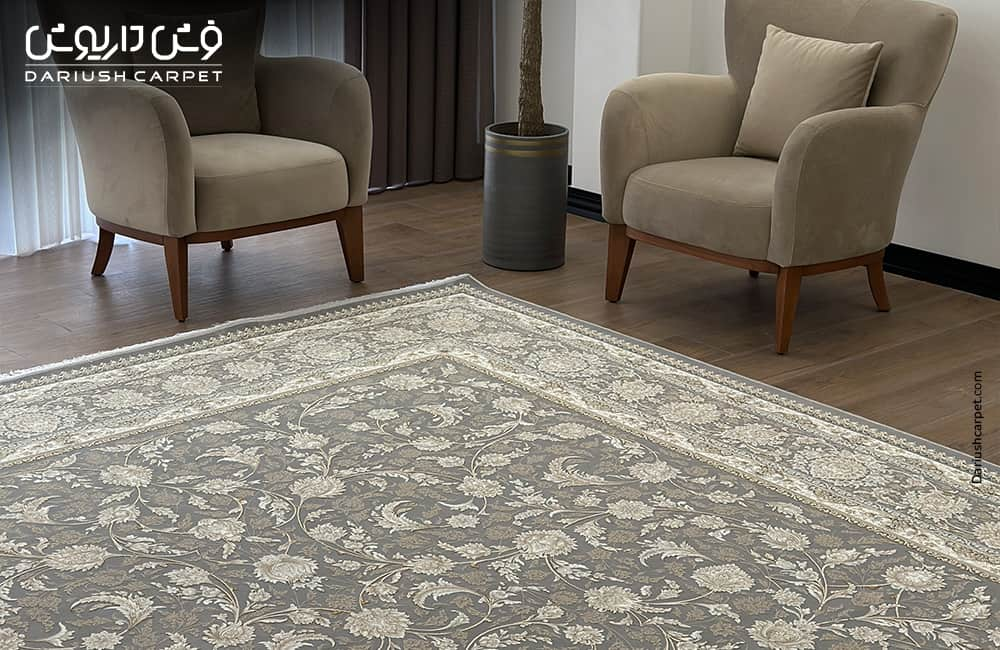
In homes with heavy foot traffic, appearance shouldn't be the only consideration. If the carpet is constantly subjected to foot traffic, moving furniture, children playing, or general daily use, selecting a product with the right specifications and high-quality fibers becomes crucial.
In such cases, a high-quality 1200-reed carpet offers excellent value; it delivers a stunning aesthetic without the extra cost associated with the highest levels of intricacy.
When is a 1500-reed carpet the better choice?
Choose a 1500-reed carpet if:
* Carpet intricacy is your top priority.
* You appreciate very fine, detailed patterns.
* Your home décor is luxurious, classic, or neoclassical.
* You want the carpet for a formal reception area.
* You have the budget for a finely woven carpet.
* You prefer an appearance that closely resembles a hand-woven carpet.
When is a 1200-reed carpet the better choice?
A 1200-reed carpet is a more suitable choice if:
* You are looking for a more reasonable price.
* You want the carpet for everyday use.
* Practicality is as important to you as beauty.
* There is relatively high foot traffic in your home.
* You want a refined, luxurious carpet but do not wish to spend the maximum budget.
* Design variety and a wider range of choices are important to you.
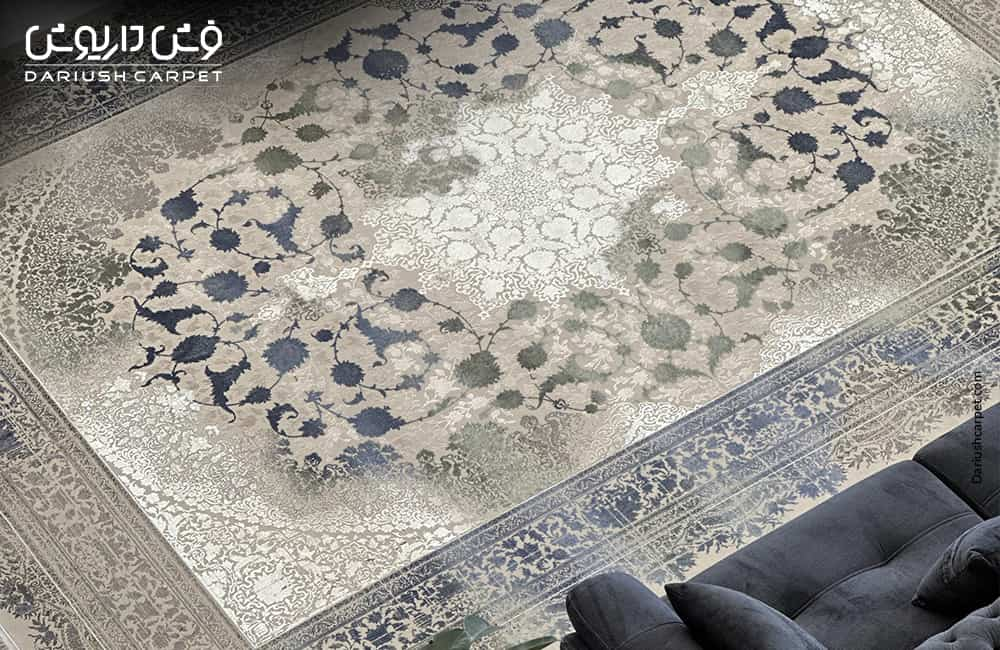
Why is the Dariush 1200-reed carpet a distinctive choice for your home?
If you are looking to purchase a high-quality, finely detailed machine-made carpet, the Dariush 1200-reed and 1500-reed carpets from Kashan are excellent choices for your home. With their high density, intricate weave, and diverse range of designs and colors, these carpets allow you to select a product that perfectly complements your home's décor. Buying directly from the Dariush brand in Kashan gives you the opportunity to browse a wider selection of products and make your choice without intermediaries.
If you are unable to visit the permanent showroom in Kashan in person, online shopping offers a convenient way to view products and specifications and place orders from any city, at any time of day or night. When selecting the right carpet, it is best to consider factors such as reed count and density, fiber material, weave quality, design, color, and suitability for the intended space.
Final Thoughts
To answer this question briefly and simply: the 1500-reed carpet wins in terms of elegance and luxury appeal among "hand-woven look" carpets, whereas the 1200-reed carpet offers the best balance of price and practicality for Iranian families.
Therefore, one cannot say that the 1500-reed carpet is always better, or that the 1200-reed carpet always offers superior value.
If you have a limited budget and want a high-quality, elegant carpet that makes practical sense, the 1200-reed products are a smart choice.
However, if your priorities are beauty, elegance, intricate patterns, and a luxurious look—and price is a secondary concern—then the 1500-reed carpet is recommended to complete your interior décor. Ultimately, do not focus solely on the "reed" count (density) when selecting and purchasing a carpet. You should evaluate factors such as fiber material, density, pile height, weave quality, design, brand, and suitability for your space to ensure you choose the right product; after all, a high-quality 1200-reed carpet can be a far better choice than a low-quality 1500-reed one.