



What is the difference between classic and modern carpets?
.jpg)
Selecting the right carpet is one of the most crucial steps in arranging and completing your home decor. Beyond simply covering the floor, a carpet plays a vital role in enhancing aesthetic appeal, harmonizing colors, and defining the overall atmosphere of an interior space. However, a fundamental question arises when shopping: should you choose a modern carpet or a classic one? The answer depends on your decor style, the dimensions of the space, your personal taste, and what you expect from your floor covering.
Modern carpets are characterized by simple motifs, geometric lines, and neutral color palettes. In contrast, classic carpets—featuring authentic patterns, symmetrical designs, and intricate details—lend a timeless quality to a space. Of course, the differences between these two types extend beyond mere appearance; factors such as fiber composition, intended use, and final price should also be considered during the selection and purchasing process.
In this article from the Dariush Carpet Magazine, we explore the differences between modern and classic carpets from various perspectives, empowering buyers to make informed decisions and select a carpet that perfectly suits their home and specific needs.
What Are the Differences Between Modern and Classic Carpets?
The primary distinction between modern and classic carpets lies in their design style and the types of motifs employed. Classic carpets typically draw inspiration from traditional, authentic Iranian designs, whereas modern carpets utilize innovative concepts, geometric shapes, and creative compositions to offer a distinct look for your flooring.
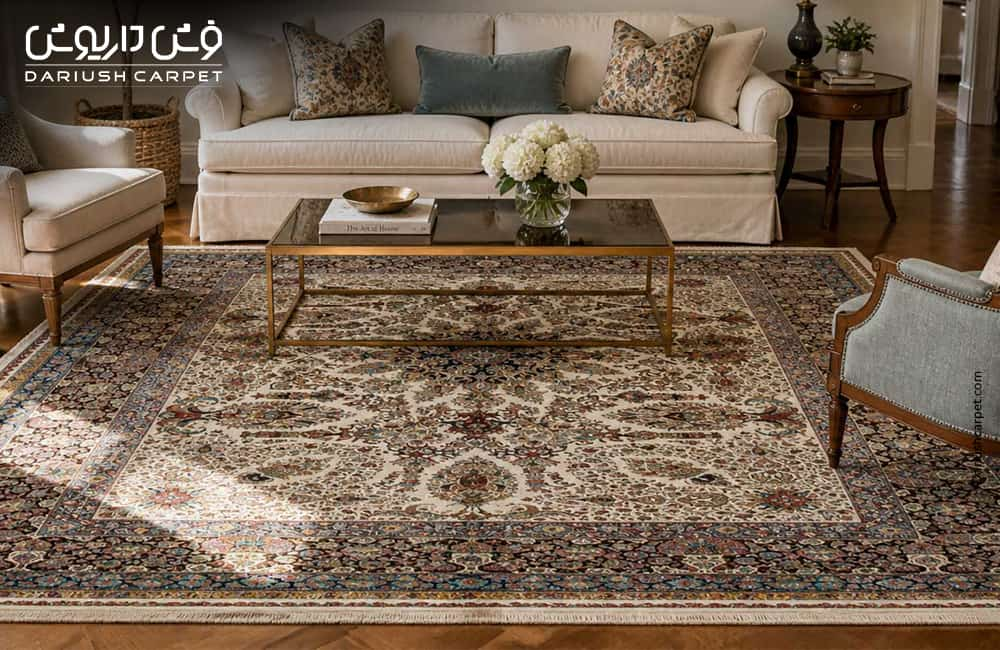
1Differences in Design and Pattern: Modern vs. Classic Carpets
The first thing that catches your eye when looking at these products is the difference in their patterns and overall appearance.
Characteristics of Classic Carpets
Classic carpets typically feature traditional Iranian motifs, such as the *toranj* (central medallion), *lachak* (corner motifs), *eslimi* (arabesque/floral scrolls), and *afshan* (all-over floral) patterns. In many of these pieces, order, symmetry, and the repetition of patterns are of great importance.
Key features of classic carpets include:
- The use of traditional and authentic Iranian motifs.
- The presence of a central medallion and corner motifs in many designs.
- Intricate details and elaborate ornamentation.
- Color palettes often featuring cream, deep red, navy blue, and rich, traditional hues.
- The creation of a formal, authentic, and timeless aesthetic within a space.
It should be noted, however, that not all classic carpets are necessarily "busy" or feature a central medallion; the Afshan design, for instance, is a classic style that typically lacks a distinct central medallion.
Characteristics of Modern Carpets
Modern carpets align more closely with contemporary design approaches and offer greater freedom in the choice of motifs compared to traditional styles. This style often incorporates irregular lines, geometric shapes, abstract designs, minimalist motifs, and a more restrained color palette.
Key features of modern carpets include:
- Simple, unique, and creative designs.
- The use of geometric lines and abstract motifs.
- A more limited range of colors.
- Compatibility with modern and minimalist interior decor.
- The inclusion of vintage-inspired and abstract patterns.
If you prefer a simple interior style, a modern carpet can be an excellent choice. Conversely, if you prefer authentic Iranian motifs and an enduring aesthetic, a classic carpet is worth considering more closely than a modern design.
2. Differences Between Modern and Classic Carpets: Weave and Quality
A common misconception is that classic carpets are of higher quality than modern ones; this is incorrect. The design style alone does not guarantee the quality of a product. To evaluate quality, one must consider the fiber material, reed count, density, and manufacturing quality.
Both classic and modern machine-made carpets can be produced with the same reed and density. Both styles are available in 700, 1,000, 1,200, and even 1,500 reed specifications.
What is the impact of and density?
Reed refers to the number of knots across the width of the carpet (within a specific unit of measurement), while density relates to the number of knots along the length. In the Iranian market, higher reed and density values generally correspond to greater intricacy and a tighter, more compact weave.
- 700 reed carpets: Typically feature greater thickness and a higher pile, making them an excellent choice for daily use.
- 1,000 reed carpets: Offer a balance between intricate design and practical functionality.
- 1,200 reed carpets: Generally feature more delicate patterns and greater detail compared to carpets with a lower reed count.
- 1,500 reed carpets: Ideal for those who prioritize design intricacy and precise, detailed aesthetics when selecting a carpet.
These characteristics depend on the product's actual structure and specifications. Therefore, when making a purchase, do not rely solely on the reeds number; you should also carefully consider the thickness, fiber material, and the quality of the weave.
3. Differences in Fiber Material: Modern vs. Classic Carpets
The type of fiber used is another key factor that determines a carpet's durability, softness, and the extent to which it may shed (produce lint). Contrary to what some buyers might think, modern and classic carpets are not necessarily made from different types of fibers.
Fibers for Machine-Made Carpets
Various fibers can be used in the production of machine-made carpets, including acrylic, polyester, and polypropylene. Each possesses its own distinct characteristics.
Acrylic Fibers: Heat-set acrylic is a well-known choice for manufacturing machine-made carpets. Compared to non-heat-set acrylic, these fibers generally offer better softness, greater durability, and reduced shedding (fuzzing).
Polyester Fibers: These typically provide good softness and a lustrous sheen; in some product lines, they are offered at a more economical price point compared to acrylic-based carpets. Their level of resistance depends on the specific construction of the carpet.
Viscose Fibers: Used in products designed to mimic silk, these plant-based fibers offer a high degree of durability and softness, comparable to actual silk.
When selecting and purchasing a high-quality carpet, it is advisable to focus on the actual fiber specifications rather than relying solely on whether the design is modern or classic.
Modern and Classic Hand-Woven Carpets
Both modern and classic styles are found in hand-woven carpets. In these pieces, the type of natural fiber used and the fineness of the knots significantly influence the product's value. Hand-woven carpets generally command higher prices due to the quality of their fibers and the intricacy of their craftsmanship; however, the final price is also determined by factors such as dimensions, authenticity, design, and the quality of the weave.
4. Which carpet is best suited for a modern interior?
The choice of carpet should harmonize with the style of the furniture, wall colors, and other decorative elements. It should be noted, however, that such harmony does not necessarily require every element in the home to follow a single, uniform style. Modern Carpets for Contemporary Homes
If your home features simple furniture, clean lines, neutral colors, and a minimalist approach to decor, a modern carpet could be the perfect choice for you.
A gray or cream carpet with a geometric pattern, paired with simple furniture, can create a serene and cohesive space. If your decor is based on a neutral color palette, you can introduce a striking focal point in your living room by choosing a carpet in a bold, standout color—such as blue, green, or brick red.
Classic Carpets for Formal Decor
Classic carpets can create a beautiful harmony when paired with formal (ornate) or wooden furniture. Their traditional patterns and diverse color palettes lend a formal air to a living or reception area. If your furniture or curtains feature intricate patterns, it is advisable to consider the overall visual busyness of the space when selecting a carpet. A carpet with balanced motifs and complementary colors can help prevent a sense of clutter or disorder.
Can Classic Carpets Be Used in Modern Decor?
Contrary to popular belief, classic carpets are not limited to homes with traditional interiors. Combining a classic carpet with modern furniture can create an engaging visual contrast. For instance, a classic carpet with a light-colored background paired with minimalist furniture, or a deep red (lacquer-colored) carpet in a space with neutral tones, can give a living room a unique and distinctive look.
5. Price Differences Between Modern and Classic Carpets
Do classic carpets necessarily cost more than modern ones? Keep in mind that you cannot determine a carpet's price based solely on its design style.
The price of a machine-made carpet generally depends on the following factors:
- Reed count and density
- Material and quality of the fibers
- Dimensions of the carpet
- Manufacturing quality
- The brand
A 1500-reed modern carpet made with high-quality fibers might be more expensive than a 700-reed classic carpet. If the technical specifications of two carpets are identical, any price difference will depend on other factors, such as the brand, the specific design, and market supply conditions.
6. Which style should you choose for the living room, bedroom, and kitchen?
The intended use of a carpet plays a significant role in determining both its style and material.
Living Room (Formal): If you want your living room to have a formal appearance, a classic-style carpet is an excellent choice. For a more understated or simple living room, a modern-style carpet would be appropriate.
Living Room: In this space, beyond just aesthetics, you should prioritize factors such as durability, ease of cleaning, and the level of foot traffic. Choose a carpet that can withstand the daily wear and tear of family life.
Bedroom: Modern carpets with neutral background tones and geometric patterns can create a tranquil atmosphere. That said, a classic carpet can also work well, provided it complements the color of the bed and other furnishings.
Kitchen: In this area, ease of cleaning and stain resistance are paramount. Generally, low-pile carpets are easier to maintain than high-pile (shag) varieties.
Small Apartments: Carpets with light-colored backgrounds and simple, uncluttered designs can help a space feel more spacious and organized. However, selecting the right dimensions and ensuring the carpet is positioned correctly in relation to the furniture is crucial.
7. Pros and Cons of Modern vs. Classic Carpets
To make the best choice, you shouldn't focus solely on aesthetics. It is essential to understand the advantages and limitations of each style so that you can make an informed and optimal decision. Advantages of Modern Carpets
- Wide variety of designs and neutral color palettes
- Easy to coordinate with many contemporary decor styles
- Simple patterns, well-suited for smaller spaces
- Availability of unique and unconventional designs
A potential drawback is that some designs may not harmonize with traditional decor; however, selecting the right colors and patterns can resolve this issue.
Advantages of Classic Carpets
- Feature authentic, traditional patterns
- Offer a wide variety of Iranian motifs
- Create a traditional aesthetic
- Versatile enough to complement both classic and modern decor
Compared to flooring with modern designs, carpets featuring traditional motifs can make a space appear visually "busy" or cluttered. Keep in mind that choosing flooring with the wrong color or dimensions can disrupt the harmony of your decor.
8. What should you consider when buying a modern or classic carpet?
To ensure you make the right choice, consider the following points before finalizing your purchase:
1. Define your decor style: Take into account the colors and shapes of your furniture, curtains, walls, and other key interior elements.
2. Measure for the right size: The carpet should be proportionate to the room's dimensions and the arrangement of your furniture.
3. Check the fiber material: Review the product's technical specifications and the characteristics of the fibers used.
4. Evaluate the weave quality: Before making a purchase, consider factors such as the "reed" count, density, and the quality of the finishing.
5. Consider maintenance requirements: If the carpet will be placed in a high-traffic area or if you have pets, ease of cleaning becomes a particularly important factor.
6. Compare prices for similar products: Carefully evaluate products based on their dimensions, fiber materials, and technical specifications.
7. Purchase your floor covering from a reputable seller. Factors such as warranties, transparent product information, access to free consultations, and return policies are crucial considerations to keep in mind before making a purchase.
Final Thoughts
To conclude, we address the question: is it better to choose a modern carpet or a classic one?
The choice between modern and classic styles depends on the buyer's personal taste, existing decor, and specific needs. Modern carpets—featuring geometric patterns, abstract motifs, and a contemporary aesthetic—are ideal for minimalist or modern spaces. Classic carpets, characterized by authentic Iranian motifs and intricate detailing, make for an attractive choice in traditional interiors, and can even complement certain modern homes.
It is worth noting that when selecting a floor covering, factors such as quality, fiber material, reed count, density, and manufacturing method are more significant than the design style alone. Furthermore, the price of a carpet is not determined solely by whether its pattern is modern or classic.
If you are planning to purchase a machine-woven carpet, we recommend exploring the Miniature and Kartal collections from Dariush Carpets and comparing them in terms of design, color, and price. You may also contact us at 09139992039 for a free consultation. Before finalizing your purchase, be sure to review the shipping terms, warranty details, and return policy so that you can shop with greater confidence.