



How to recognize a good carpet?
Purchasing a machine-made carpet involves more than just selecting a beautiful design or a color that complements your home décor. Since a carpet is an item used in the home for years, factors such as fiber quality, weave type, reed count and density, color fastness, and the seller's reputation are crucial. Sometimes, two carpets may look identical at first glance yet differ significantly in terms of durability and price.
But the key questions remain: How can you determine a carpet's reed count? Which yarn offers better quality? Does a carpet that sheds always indicate poor quality? In this article by Dariush Carpet, we explore the most important methods for assessing the quality and authenticity of machine-made carpets, enabling you to make a more informed choice.
What characterizes a high-quality machine-made carpet?
To identify a high-quality machine-made carpet, you must first distinguish between "product authenticity" and "product quality." Authenticity means the carpet genuinely originates from the stated brand or manufacturer and its specifications match the provided information. Quality, on the other hand, depends on factors such as fiber material, structural integrity, color fastness, and durability.
A high-quality carpet typically exhibits the following characteristics:
- The pile yarn material and other technical specifications are accurately stated.
- The reed count and density match the actual specifications.
- The carpet pattern is clear, and the weave is free of obvious defects.
- Colors are uniform, with no unusual color variations across the carpet's surface.
- The edges (selvages) are intact and neatly finished.
- Product information, manufacturer details, and warranty terms are verifiable.
Note that no single one of these indicators is sufficient on its own to prove the carpet's quality or excellence.
Examine the carpet fiber material—the most important quality criterion
One of the first things to consider when buying a machine-made carpet is the material of the pile yarn. The pile yarn consists of the fibers that form the visible, textured surface of the carpet. The type of yarn used affects the carpet's softness, appearance, abrasion resistance, and tendency to shed.
Various fibers are used in the production of machine-made carpets, with acrylic, polyester, and viscose being among the most significant. Each of these fibers possesses distinct characteristics, and the right choice depends on fiber quality, the manufacturing method, and the intended use of the carpet.
Acrylic Carpets: A Suitable Choice for Daily Use
Acrylic is a widely used fiber in the production of machine-made carpets. Acrylic carpets generally offer good resistance to daily wear and tear; when manufactured to high standards, they serve as an excellent choice for high-traffic areas. While this type of carpet performs well under pressure and abrasion, its ultimate durability depends on factors such as yarn quality, carpet construction, and usage conditions.
What Are the Advantages of Heat-Set Acrylic Carpets?
Heat-setting is a thermal process applied to fibers to enhance specific properties. When performed on suitable fibers, this process helps reduce shedding, improves fiber resilience, and creates a more uniform appearance.
What Are the Characteristics of Polyester and Polypropylene Carpets?
Polyester can give carpets a lustrous appearance and a pleasant, soft texture. Fibers made from this material come in various forms—such as filament yarns—used in machine-made carpet production. Polypropylene is also utilized in the manufacture of certain carpets due to its unique properties.
However, one cannot judge the final product's quality solely by the fiber type; the quality of the raw material, yarn type, weave density, and manufacturing standards are all crucial factors.
How Can Carpet Shedding Be Evaluated?
Shedding is another key factor buyers consider when selecting machine-made carpets. While a small amount of loose fiber (fuzz) may appear during the initial use of some products, excessive or persistent shedding can indicate issues with fiber quality or the manufacturing process. To assess shedding, consider the following points:
- Gently run your hand over the carpet's surface and check the amount of loose fibers.
- Look for any accumulation of lint or fuzz on different parts of the carpet.
- If possible, ask the seller about the product's typical shedding behavior and recommended care.
A few fibers sticking to your hand does not necessarily indicate poor quality, nor does the absence of loose fibers upon initial touch guarantee a high-quality carpet. This factor should be evaluated alongside other product characteristics.
Understand Carpet Reed and Density
"Shaneh" (reed count) and density are among the most important technical specifications of machine-made carpets. Many buyers confuse these two terms, even though they refer to distinct concepts.
What is carpet "shaneh" (reed count)?
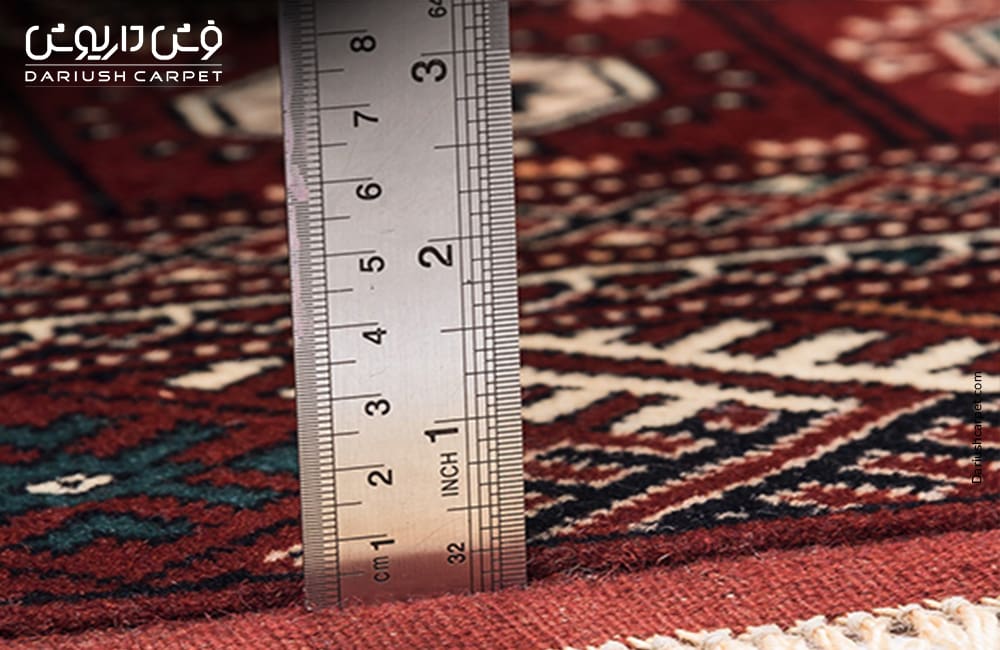
"Shaneh" refers to the number of knots across a specific width of the carpet and is usually expressed as a count per meter. For instance, a 1200-shaneh carpet typically has 1,200 rows of knots per meter of its width.
All else being equal, a higher shaneh count allows for finer patterns and greater detail in the design. Consequently, high-shaneh carpets often feature a more intricate, finely detailed appearance.
What is carpet density?
In common market terminology, density refers to the number of knots along a specific length of the carpet and is usually stated as longitudinal density. To accurately compare two products, one must examine the definitions and technical specifications provided by the manufacturer.
Density alone does not necessarily indicate greater durability.
Is a 1500 reed carpet always better than a 1200 reed carpet?
No. A 1500 reed carpet usually offers more detail and a finer texture, whereas 1200 reed carpets are often thicker and may be more suitable for certain high-traffic areas.
If design intricacy and a formal aesthetic are your priorities, a higher-reed carpet might be the right choice. However, if surface softness or suitability for daily use is more important to you, you should compare the actual specifications of each product.
Distinguishing a genuine high-reed carpet from a "design-style" imitation
One factor that can mislead buyers is the use of terms like "1200 reed design." A carpet with a lower actual reed count might be produced using a pattern identical to that of a 1200 reed carpet. In this case, a similarity in design does not mean the two products share the same technical specifications. To avoid mistakes:
- Ask the seller for the actual reed count.
- Check the specifications listed on the product certificate or label.
- Compare the density and yarn type against the stated information.
- Ensure the offered price aligns with the carpet's actual specifications.
Using a similar design does not necessarily constitute fraud; the problem arises when the product's actual specifications are vaguely communicated to the buyer.
Carefully examine the carpet's color and pattern
Color and pattern are the first features to catch a buyer's eye; however, visual appeal alone is not enough to assess quality.
Pay attention to the following points when examining the carpet:
- The lines and details of the pattern should be reasonably sharp and clear.
- The colors should align with the pattern and the stated specifications.
- There should be no unusual color variations across the carpet.
- Look for any stains, suspicious discoloration, or obvious defects in the weave.
Note that a high sheen does not necessarily indicate superior quality. Some fibers are naturally glossier than others, and the level of luster depends on the fiber material, surface structure, and the angle of the light.
What does the carpet's odor reveal about its quality?
An unusual odor may stem from the raw materials, packaging, storage conditions, or environmental factors. If you detect an unusual smell, ask the seller for the cause; until the issue is clarified, avoid placing the carpet in an enclosed space or an area with poor ventilation.
Keep in mind that even carpets made from acrylic fibers have a characteristic scent associated with that material; therefore, odor alone is not a reliable indicator for distinguishing between high-quality and low-quality carpets.
Check the carpet's product label
The product label or specification tag is the most important tool for verifying product details. When purchasing—especially when comparing carpets that look similar—the written specifications allow you to evaluate and compare the products more accurately. The identification details (found on the label on the back of the carpet) may include the following:
- Brand or manufacturer name
- Carpet dimensions
- Stated reed count and density
- Pile yarn material
- Other technical specifications, such as pile height or weave type (if listed)
- Product code and traceability information
- Warranty terms and after-sales service details
The mere presence of a label does not definitively guarantee authenticity; the information provided must match the seller's claims and the actual product specifications. If purchasing online, inquire about full specifications, return policies, and warranty terms before finalizing your order.
Examine the quality of the weave, edges, and back of the carpet
Many carpet defects are not apparent just by looking at the surface. Inspecting the back and sides can provide more insight into the uniformity of the weave and the quality of the finishing.
When inspecting the carpet in person, check the following:
- The back of the carpet should be consistent with the product's expected specifications regarding weave uniformity and regularity.
- The edges should be intact, showing no signs of unraveling or visible damage.
- The surface should be free of unusual bumps or depressions.
- The overall dimensions and shape should match the stated specifications.
- There should be no visible defects, tears, or significant flaws in the finishing.
The weave on the back of the carpet can vary between products; therefore, comparisons should take into account the specific machinery and construction of the product in question. A single visual indicator is not enough to make a definitive judgment about quality.
Prioritize the warranty and the seller's reputation
You may not be able to identify every technical detail regarding the yarn and weave at the time of purchase. In such cases, the seller's reputation and the transparency of product information become crucial.
Ask the following questions before buying:
- Are the carpet's technical specifications provided in writing?
- Are the yarn material, reed count , and density clearly stated?
- What exactly does the product warranty cover?
- What is the procedure for addressing defects or discrepancies with the order specifications?
- Is it possible to view actual photos of the product or obtain additional information?
What mistakes should be avoided when buying a machine-made carpet? To make a better choice, avoid these common mistakes:
1. Choosing solely based on price: A lower price does not always mean a better purchase. Compare the specifications of the two products.
2. Assuming higher reed count always means better quality: A higher reed count usually contributes to the intricacy of the design, but it does not—on its own—determine the carpet's durability or suitability for your needs.
3. Relying entirely on touch: Touching the carpet can provide information about its softness and surface texture, but it does not confirm the exact yarn material or the product's authenticity.
4. Ignoring the product certificate and warranty: Written specifications, warranty terms, and the ability to contact the seller are crucial for a secure purchase.
5. Focusing only on appearance: Beautiful colors and attractive designs are important, but they should be considered alongside weave quality, technical specifications, and the carpet's intended use.
Frequently Asked Questions
Below, we answer the most important questions buyers have.
What is the best way to identify a high-quality machine-made carpet?
The best method is to simultaneously evaluate the yarn material, reed count and density, weave uniformity, color quality, product certificate, and the seller's reputation. No single visual cue guarantees the carpet's quality or authenticity.
Is an acrylic carpet better than a polyester one?
It depends on fiber quality, yarn type, manufacturing method, and intended use. A high-quality acrylic carpet can be a great choice for daily use; conversely, some polyester carpets offer a glossy appearance and practical features. It is best to compare the actual specifications of the products.
Does carpet shedding indicate poor quality?
A limited amount of loose fibers (shedding) may be observed during initial use. However, excessive or persistent shedding may warrant further investigation and should be evaluated based on the yarn type, care instructions, and warranty terms.
How can you tell if a carpet is truly 1200-reed?
First, check the carpet's product label and written specifications, and ask the seller to confirm the technical details. Simply touching the carpet or looking at the intricacy of the pattern is not enough to determine the reed count.
Is a 1500-reed carpet better than a 1200-reed carpet?
A 1500-reed carpet usually features a more intricate design; however, the better choice depends on how you intend to use it, the required thickness, yarn quality, weave structure, and your budget. Do not base your decision solely on the reed count.
Can the smell of a carpet reveal its yarn material?
Smell alone is not a reliable indicator of fiber type or carpet quality. To verify the yarn material, consult the product specifications and reliable information from the manufacturer.
Final Thoughts
To conclude, how can you purchase a carpet with greater confidence?
When buying a machine-made carpet, you should not rely solely on advertisements, aesthetics, or price. It is best to evaluate the yarn material, actual reed and density specifications, weave uniformity, color quality, product label, and warranty terms collectively.
If you are shopping online, written product specifications and seller transparency become even more important, as you cannot inspect or touch the carpet in person.
At Dariush Carpet, review the technical specifications, dimensions, design, and warranty terms of your desired carpet before making a selection, ensuring your choice aligns with your home environment, usage needs, and budget. A good purchase is not merely about choosing a beautiful carpet; it is about selecting a product whose specifications you know and whose purchasing terms you are confident in.